

IT HAD TO BE
A FLOWER
FARM
When we were developing the concept for the School, one thing was non-negotiable: it had to be based on a flower farm.
Most floristry schools teach floristry in a classroom. We teach it surrounded by the flowers themselves.
At the School of Sustainable Floristry, reconnecting people to their medium is one of our core objectives. Whether you're a professional florist, an aspiring florist or simply someone who loves flowers, we believe there is enormous value in understanding where flowers come from, how they grow, how they change through the seasons and what makes them perform at their best.
Learning on a flower farm allows us to do exactly that.
Students spend time in the gardens and flower fields, observing the flowers through the seasons, understanding how they are grown and harvested, and selecting materials directly from the landscape before transforming them into floral designs.
Located on the outskirts of Bedford, Howbury Farm Flowers provides the perfect setting. Set within a historic Walled Garden and wider estate, students have access not only to the flowers themselves, but also to the wider ingredients of the landscape: foliage, fruiting branches, seedheads, grasses and the ever-changing character of the seasons.
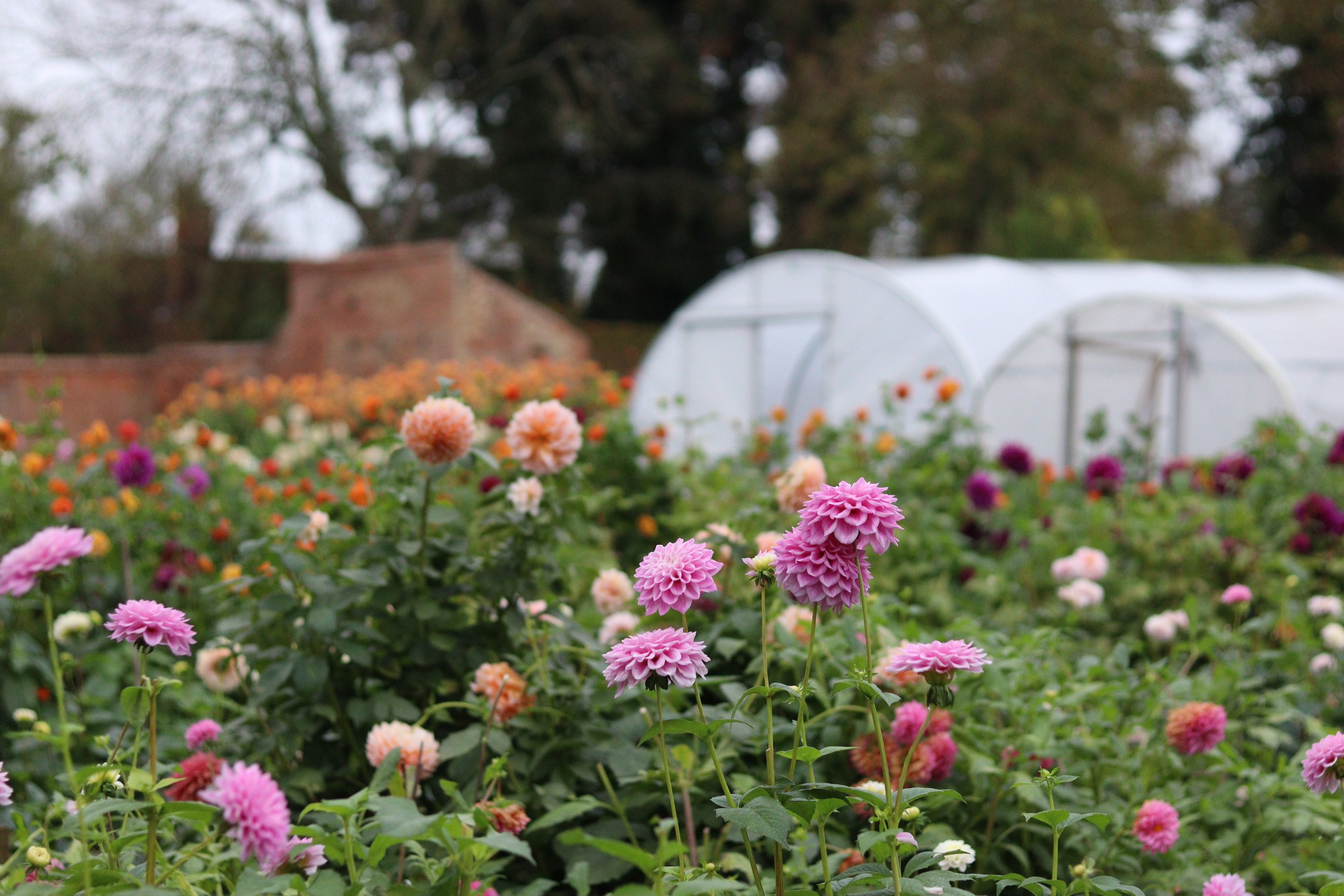
THE WALLED GARDEN
All the flowers used in our courses are grown within the 19th century Walled Garden at Howbury Farm Flowers. Flowers have been grown here for over 200 years, and Lucy and her team take the stewardship of the garden, its soil and biodiversity very seriously. All the flowers are grown using organic practices and are, of course, peat free.
Students spend time in the Walled Garden on all our courses, understanding how the flowers are grown, how and when to harvest them and how to select materials for their designs.
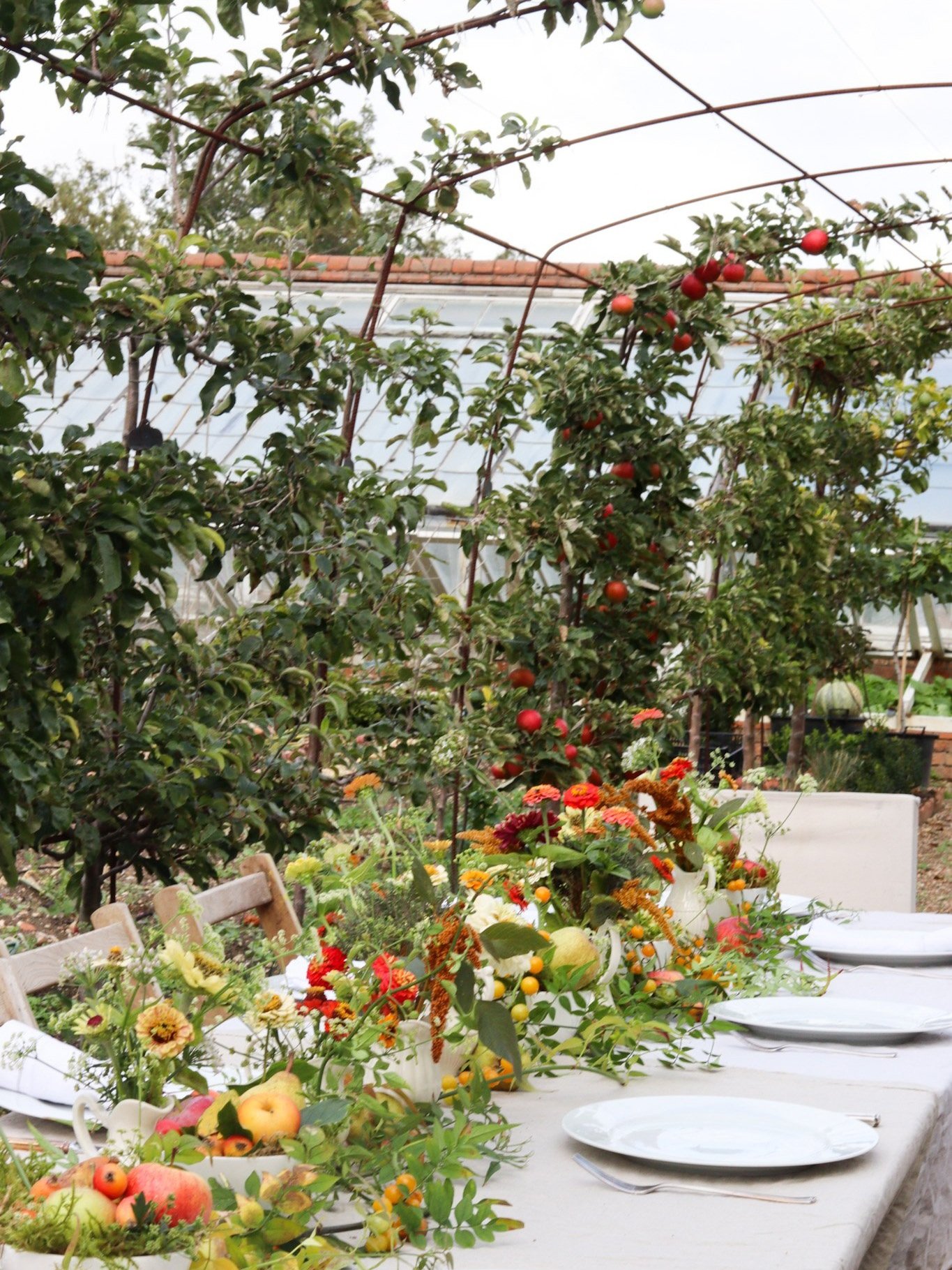
THE KITCHEN GARDEN
Alongside the Walled Garden sits the Kitchen Garden. Between the rows of pleached heritage apple and peach trees, fruit and vegetables (and our beloved marigolds) are grown to feed both the main house, the many houses on the Estate and all our students.
The connection between landscape, seasonality and provenance runs through every aspect of the School, including the food we share around the table.
The Kitchen Garden is also often raided for our floral arrangements, from fruiting branches, to artichokes to tomatoes on the vine. All ingredients are explored and embraced.

THE FLOWER BARN
Courses are predominantly taught in the studio workshop inside the beautiful old coach house. Originally a stable house, it has been repurposed into a teaching space, and benefits from beautiful natural light, making it an inspiring space in which to learn and create.
Classes are kept to a maximum of 10, to ensure that everyone receives a sufficient level of attention and learning. When larger arrangements and installations are created, the group moves outside or into the House depending on the design.

THE HOUSE & ESTATE
Rebuilt in the 19th century after the original house was burnt down when smoking out bees, Howbury Hall offers the perfect backdrop to our courses. With a wide sweeping staircase, large fireplaces, huge windows and the dramatic entrance, there are numerous options for teaching the design and mechanics of floral installations.
The Estate is set across 500 acres and offers numerous hedgerows and trees, as well as the formal gardens, for exploring the wider palette of seasonal materials available throughout the year.